


When Your Sump Pump Discharge Line Freezes: A Hidden Wisconsin Winter Hazard

Wisconsin homeowners know that frozen pipes are a serious winter concern, but there's another plumbing problem that can develop when temperatures drop: a frozen sump pump discharge line. Unlike a frozen water supply pipe, which might leave you without running water, a frozen sump pump discharge line can prevent your home's drainage system from doing its job and potentially lead to a flooded basement.
This problem is particularly troublesome during Wisconsin's unpredictable winters, when temperatures can swing above and below freezing in a matter of days. Melting snow, winter rain and saturated soil can send water toward your foundation while ice is still blocking the pipe that's supposed to carry that water away.
Understanding how your sump pump system works, what causes discharge lines to freeze and how to recognize the warning signs can help you avoid an expensive plumbing emergency.
How Your Sump Pump Protects Your Basement
Your sump pump is designed to collect and remove groundwater that accumulates around your home's foundation. Water typically enters a sump pit through a perimeter drainage system or other groundwater collection points. As the water level rises, a float switch activates the pump, which pushes the collected water through a discharge pipe and away from your home.
The discharge line is an essential part of this process. Even if your pump is operating perfectly, it cannot effectively remove water when the discharge pipe is blocked.
Most residential sump pump systems include several important components:
Sump pit: The basin where groundwater collects before being pumped out.
Float switch: The mechanism that activates the pump when water reaches a predetermined level.
Check valve: A one-way valve that prevents water in the discharge pipe from flowing back into the pit after the pump stops.
Discharge line: The piping that carries water from the pump to an appropriate drainage location outside your home.
During the warmer months, these components generally work together without much attention. During a Wisconsin winter, however, the outdoor portion of the discharge line can become vulnerable to freezing.
Why Sump Pump Discharge Lines Freeze
A sump pump discharge line freezes when water remains inside the pipe long enough for temperatures to fall below freezing.
Ideally, the outdoor discharge line should be installed so that water drains away after each pumping cycle. If the pipe has low spots, improper slope or an outlet that allows water to accumulate, some of that water can remain inside the line.
As temperatures drop, the standing water begins to freeze. Repeated pumping cycles may add more water to the obstruction, allowing ice to accumulate until the pipe becomes partially or completely blocked.
Several conditions make this more likely in Wisconsin homes:
1. Improper discharge pipe slope
A discharge line that sags or runs uphill can trap water instead of allowing it to drain. This is especially common with flexible discharge hoses that have settled over time or were not properly supported during installation.
Even a relatively small amount of standing water can create an ice blockage when temperatures remain below freezing.
2. Exposed or shallow discharge piping
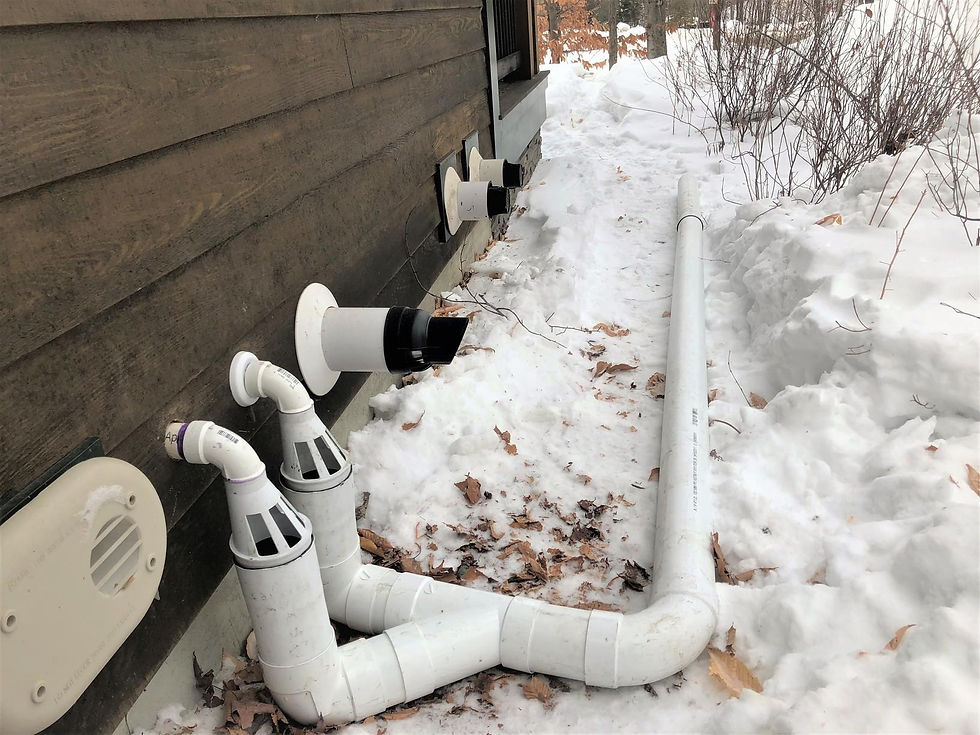
Outdoor discharge pipes are exposed to Wisconsin's winter temperatures. Aboveground pipes, particularly those installed along the side of a house or across a yard, can freeze when water remains inside them.
Buried discharge lines can also freeze if they are installed too shallow, have inadequate drainage or terminate in an area where ice accumulates.
3. Snow and ice blocking the outlet
Sometimes the discharge line itself is clear, but the opening becomes buried beneath snow or blocked by ice.
This can happen when snow is piled against the side of a house or when discharged water repeatedly freezes around the outlet.
Once the opening becomes obstructed, the pump may no longer be able to discharge water effectively.
4. Repeated freeze-thaw cycles
Wisconsin's changing winter temperatures can create particularly challenging conditions for sump pump systems.
During a brief warm spell, melting snow may increase groundwater levels and cause your sump pump to run more frequently. When temperatures fall again, water remaining in the discharge line can freeze.
Repeated cycles of melting and freezing can gradually build up ice, eventually restricting the pipe.
Five Warning Signs Your Sump Pump Discharge Line May Be Frozen
A frozen discharge line is not always immediately obvious. In many cases, homeowners first notice that their sump pump is behaving differently.
Here are five signs worth watching for:
1. Your sump pump runs continuously.
If your sump pump continues running without lowering the water level in the pit, it may be trying to push water through a blocked discharge line. Continuous operation can also indicate other problems, including a malfunctioning float switch or a failing pump.
2. Water levels in the sump pit keep rising.
Your pump should lower the water level when it activates. If the water continues rising while the pump is operating, the discharge line may be obstructed or the pump may not be functioning properly.
3. You hear unusual noises.
A sump pump that is struggling against a blockage may sound different than it normally does. Humming, vibration or prolonged operation can indicate that something is preventing the system from working correctly.
4. You don't see water leaving the discharge pipe.
If your pump is running but no water is coming out of the outdoor discharge line, the pipe may be frozen or otherwise obstructed. This is particularly concerning when the sump pit is filling with water.
5. Ice accumulates around the discharge outlet.
Ice forming around the end of your discharge pipe can eventually block the opening. Large accumulations may also indicate that discharged water is not draining away properly.
These symptoms can have several causes, so a professional inspection is the most reliable way to determine whether the problem involves ice, a mechanical failure or another drainage issue.
What Happens If Your Sump Pump Runs Against a Frozen Discharge Line?
When a discharge line becomes blocked, the pump may continue trying to move water even though it has nowhere to go.
Depending on the pump's design, the motor may overheat, activate its thermal overload protection or experience accelerated wear. A pump that repeatedly shuts down and restarts may also fail to keep up with incoming groundwater.
Meanwhile, water continues entering the sump pit. Once the pit reaches capacity, that water can overflow onto your basement floor.
In a finished basement, the resulting damage may extend beyond wet carpeting. Water can affect drywall, insulation, flooring, electrical equipment and stored belongings.
Even an unfinished basement can experience significant damage when groundwater is allowed to accumulate.
The important thing to understand is that a functioning pump does not guarantee a functioning drainage system. The pump, discharge piping and drainage outlet all need to work together.
How to Prevent Your Sump Pump Discharge Line From Freezing
Fortunately, there are several practical steps Wisconsin homeowners can take to reduce the risk of a frozen discharge line.
Check the discharge line before winter
Before freezing temperatures arrive, inspect the outdoor portion of your sump pump discharge system.
Look for sagging hoses, low spots where water may collect, damaged piping and outlets that appear partially blocked.
If you have a flexible discharge hose, make sure it is properly supported and positioned to allow water to drain. A permanent, properly installed discharge line may be a better long-term solution if your current setup regularly develops problems.
Keep the outlet clear of snow and ice
Make sure the discharge opening remains accessible throughout the winter.
Avoid piling snow directly against the outlet when shoveling or clearing your driveway. After significant snowfall, check that the opening has not become buried.
During warmer periods, look for ice buildup that could interfere with drainage when temperatures drop again.
Make sure water drains away from your foundation
Your discharge line should carry water to an appropriate location away from your home, where it can drain without flowing back toward the foundation.
A poorly positioned outlet can create a cycle in which the sump pump removes water from the basement only for that water to return to the surrounding soil.
The discharge arrangement must also comply with applicable local drainage requirements.
Consider a freeze-resistant discharge configuration
If your discharge line freezes repeatedly, the problem may be related to how the system was installed.
Depending on your property's layout, Viking Plumbing can evaluate whether changes to the pipe routing, slope or discharge configuration would improve winter performance.
Some installations may benefit from an appropriately designed freeze-relief arrangement that provides an alternate discharge path if the primary outdoor line becomes blocked.
The correct solution depends on the system and must prevent discharged water from creating additional problems near your foundation.
Test your sump pump regularly
A sump pump should be tested periodically, particularly before the winter season and during periods of heavy snowmelt.
For systems where the manufacturer's instructions permit it, you can slowly pour water into the sump pit until the float switch activates. Observe whether the pump starts, lowers the water level and shuts off normally.
You should also verify that water is reaching the intended discharge location.
If the pump operates but the water level does not fall, stop the test and have the system inspected. Do not continue adding water to a pit that is not draining.
What Should You Do If Your Discharge Line Is Already Frozen?
If you suspect that your sump pump discharge line is frozen, the first priority is preventing the sump pit from overflowing.
Check the water level and determine whether the pump is successfully removing water. If the pump is running continuously without lowering the water level, do not allow it to continue operating indefinitely against a suspected blockage.
If the pump needs to be shut off to prevent damage, follow the manufacturer's instructions and make sure you have a safe way to manage incoming water. Do not unplug electrical equipment while standing in water.
You can visually inspect the outdoor discharge outlet for snow and ice, but avoid attempting to thaw inaccessible piping yourself.
Never use an open flame, torch or other high-temperature device to thaw a frozen discharge pipe. Excessive heat can damage piping and create a fire hazard.
If the blockage is inside a buried pipe or you cannot safely identify its location, professional service is the appropriate next step.
A plumber can evaluate the system, identify the obstruction and determine whether repairs or modifications are needed to prevent the problem from returning.
When Should You Call Viking Plumbing?
A frozen sump pump discharge line should be addressed promptly, especially when groundwater levels are rising.
Contact Viking Plumbing if your sump pump runs continuously without removing water, the sump pit is approaching capacity or the outdoor discharge line repeatedly freezes.
You should also schedule an inspection if your system has experienced previous winter drainage problems or you are unsure whether your discharge configuration is suitable for Wisconsin's climate.
Viking can evaluate the pump and discharge system, identify the cause of drainage problems and recommend appropriate repairs or improvements.
Protect Your Basement Before the Next Wisconsin Freeze
A frozen sump pump discharge line may seem like a relatively minor plumbing issue, but it can compromise the system responsible for keeping groundwater out of your basement.
The combination of freezing temperatures, melting snow and changing groundwater levels makes preventive maintenance especially important for Wisconsin homeowners.
Checking your discharge line before winter, keeping the outlet clear and recognizing the early warning signs can help reduce the risk of unexpected basement flooding.
If your sump pump isn't working properly or you're concerned about your discharge line freezing, contact Viking Plumbing. Our team can help identify the problem and make sure your system is prepared for the conditions ahead.
You Deserve Good Water. You Deserve a Dry Basement.


